Madayn plans 98 projects over next 5 years
1/28/20263 min read
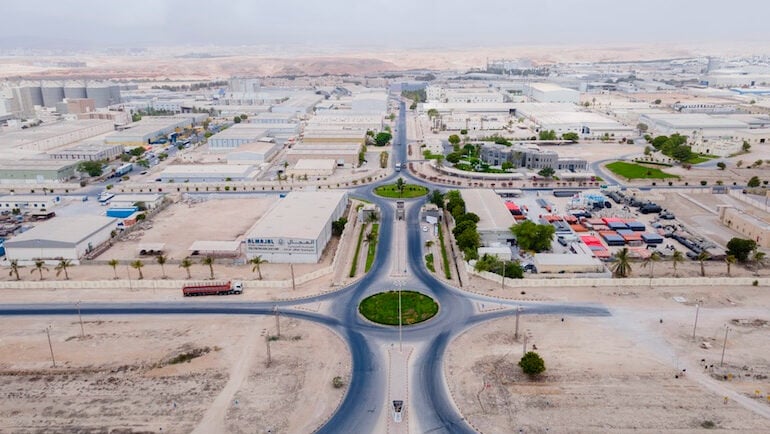
Muscat: The Public Establishment for Industrial Estates (Madayn), which oversees Oman’s network of industrial cities, has unveiled plans to roll out 98 major projects over the coming five years as part of its long-term growth strategy.
Dawood bin Salim Al Haddabi, Chief Executive Officer of Madayn, said the initiatives will be carried out under the 11th Five-Year Development Plan covering the period from 2026 to 2030.
Speaking to Duqm Economist, a quarterly publication of the Public Authority for Special Economic Zones and Free Zones (OPAZ), Haddabi explained that the projects fall under three strategic focus areas aligned with Oman Vision 2040. These include 51 projects dedicated to development and operational expansion, 36 initiatives aimed at institutional excellence, and 11 projects centred on environmental sustainability.
According to Haddabi, the next phase of development will see large-scale infrastructure and utilities projects implemented across multiple governorates. Planned works include the first phase of infrastructure development at Al Mudhaibi Industrial City spanning around 2.5 million square metres, and similar Phase 1 works at Al Suwaiq Industrial City covering approximately five million square metres. Infrastructure development is also planned for Madha Industrial City over an area exceeding 348,000 square metres.
Additional projects include the upgrading and rehabilitation of infrastructure at Al Wadi Al Kabir Industrial City, alongside the preparation of a comprehensive master plan. Sohar Industrial City will undergo multiple stages of service enhancements and infrastructure upgrades, while Sur Industrial City is set to receive a marine berth along with a newly developed master plan. Expansion of water networks is also planned at Raysut Industrial City.
Haddabi noted that Madayn’s Digital Transformation Execution Plan for 2026–2030 marks a major institutional shift, bringing all digital initiatives under a unified transformation roadmap. The plan targets the delivery of 105 digital projects across 12 core pillars, covering areas such as digital readiness, service experience, digital infrastructure and innovation.
He added that Madayn aims to achieve international recognition for two of its industrial cities as smart cities, automate key services with full integration across government and private platforms, and raise investor satisfaction levels beyond 85%. Advanced technologies including artificial intelligence, the Internet of Things, big data analytics and renewable energy solutions will also be embedded into future industrial infrastructure.
Investment growth reaches RO7.8bn
Highlighting Madayn’s recent performance, Haddabi said cumulative investments across its industrial cities reached approximately RO7.8bn by the end of the first half of 2025, marking a 2% increase compared with the same period last year. The total number of projects rose to 2,095, while contracts climbed to 2,385, reflecting growth of more than 3% in both indicators.
The total leased land area across Madayn’s industrial cities, Knowledge Oasis Muscat and the Al Mazyona Free Zone reached 34.6 million square metres out of a developed area of 61.6 million square metres, resulting in an occupancy rate of 68%. During the first half of 2025, Madayn received 215 new investment applications and signed 124 project agreements valued at over RO80mn, covering nearly 895,000 square metres.
Reflecting on achievements under the 10th Five-Year Development Plan (2021–2025), Haddabi said Madayn completed several major projects aimed at strengthening Oman’s investment ecosystem. These included the first development phase of Ibri Industrial City over three million square metres, infrastructure works at Mahas Industrial City exceeding 1.4 million square metres, and Phase 7 infrastructure development at Sohar Industrial City covering more than 8.5 million square metres.
Other achievements included consultancy, design and supervision services for industrial complexes in Rusayl, Nizwa, Mahas, Suwaiq and Madha, as well as comprehensive surveying and mapping of industrial cities using drone technology.
Economic clusters and innovation
Haddabi said Madayn has also focused on developing integrated economic clusters that capitalise on local resources and regional advantages to support Oman’s diversification agenda. One of the key initiatives is the Integrated Mining Economic Cluster in Shaleem, with a master plan covering 30 million square metres and detailed designs for 10 million square metres targeting the oil, gas and mining sectors.
The project includes infrastructure planning for transport networks, water and sewage systems, stormwater drainage, and support facilities, alongside economic feasibility and marketing studies.
In addition, Madayn has begun preparations for implementing the Integrated Aluminium Economic Cluster at Sohar Industrial City. This includes finalising detailed plans, setting performance benchmarks, coordinating with public and private stakeholders, and appointing specialised consultants to assess downstream aluminium industries and value-added manufacturing opportunities.
Haddabi also highlighted the role of the Industrial Innovation Academy in fostering innovation, strengthening SME capabilities and encouraging large companies to adopt advanced technologies that support local value creation in line with Vision 2040.
Among Madayn’s flagship social initiatives is the Omanisation Programme, implemented in partnership with the Ministry of Labour, which targets the creation of 1,000 jobs annually. The programme has already generated more than 3,000 employment opportunities across industrial cities.
He added that the RABT digital platform has significantly improved access for SMEs by directly linking local products to government procurement systems, allowing businesses to integrate into national supply chains more efficiently.