Alleged mastermind among four arrested after Pakistan mosque blast
2/8/20262 min read
Four people have been arrested in connection with a suicide bombing that killed more than 30 worshippers during Friday prayers in Pakistan’s capital, the country’s interior minister has confirmed.
Interior Minister Mohsin Naqvi said the detainees include an Afghan national believed to be the key planner of the attack. He added that a counter-terrorism officer was killed and three others were injured during operations carried out to arrest the suspects.
The explosion struck a packed Shia mosque in Islamabad’s Tarlai area during Friday prayers. The Islamic State group has claimed responsibility for the attack. Officials said more than 160 people were wounded, making it the deadliest attack in the capital in over ten years.
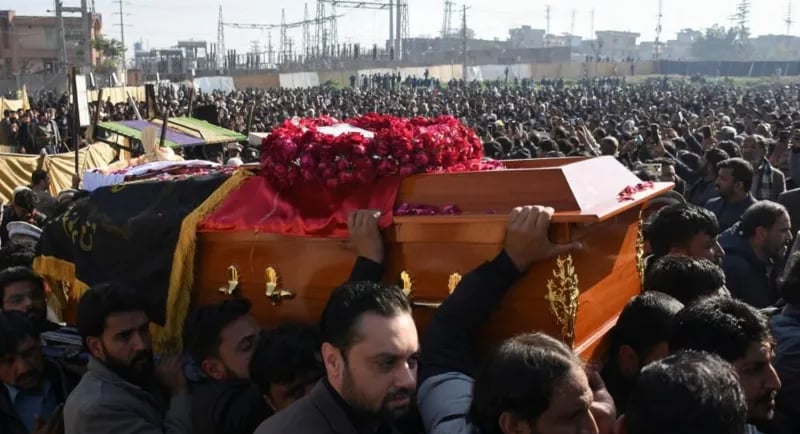
On Saturday, large crowds gathered across the city for the funerals of 32 victims. Security was significantly tightened, with soldiers deployed and police checkpoints set up at major locations.
Ashiq Hussain, whose 21-year-old nephew Mujtaba Ali was killed in the blast, told Reuters that his family was devastated by the loss.
Pakistan’s Prime Minister Shehbaz Sharif strongly condemned the attack, expressing deep sorrow over the loss of innocent lives. President Asif Ali Zardari described the targeting of civilians as a crime against humanity.
Survivors and eyewitnesses described scenes of chaos and horror. One man told the BBC he lost consciousness moments after the explosion, while another said bodies were scattered across the mosque.
Following the arrests, Naqvi alleged that India had provided funding and targets to those behind the attack. India’s foreign ministry rejected the accusation, calling it unfounded, while also condemning the bombing.
Earlier, Defence Minister Khawaja Asif suggested that Afghanistan may have played a role in the incident. The Afghan Taliban government dismissed the claim, calling the remarks irresponsible and unsupported by evidence.
Naqvi said authorities would further strengthen security in Islamabad, including recruiting thousands of new police officers and upgrading the city’s smart surveillance systems.
Although militant attacks are uncommon in the capital, a bombing in November killed 12 people and injured 27 others.
Friday’s attack followed a violent week in which 58 civilians were killed in coordinated assaults across Balochistan province. The Balochistan Liberation Army claimed responsibility for those attacks, while the military said it had killed more than 200 militants in retaliatory operations.